Manufacturing quality control is getting a serious upgrade. Old ways of checking products just aren’t cutting it anymore, especially with how fast things move today. That’s where advanced thermal imaging solutions come in. These tools let you see heat, which can tell you a lot about what’s going on with equipment and products, often before any real problems pop up. It’s a game-changer for keeping things running smoothly and making sure what you produce is top-notch.
Table of Contents
- Enhancing Quality Control With Advanced Thermal Imaging Solutions
- Leveraging Advanced Thermal Imaging Solutions for Predictive Maintenance
- Optimizing Plant Productivity Through Thermal Monitoring
- The Role of Resolution and Sensitivity in Thermal Imaging
- Integrating Advanced Thermal Imaging Solutions Into Operations
- Choosing the Right Thermal Imaging Solution for Your Industry
- Driving Cost Savings and Efficiency with Thermal Imaging
- The Future of Advanced Thermal Imaging Solutions in Manufacturing
- Ensuring Reliability Through Support and Training
- Expanding Applications with Multi-Spectral Thermal Imaging
- Wrapping It Up
- Frequently Asked Questions
Key Takeaways
-
Advanced thermal imaging solutions are becoming vital for manufacturing quality control, offering a way to spot issues that traditional methods miss.
-
These systems allow for real-time defect detection by showing temperature variations invisible to the human eye.
-
Using thermal imaging for predictive maintenance can save companies a good chunk of money compared to fixing things after they break.
-
Continuous thermal monitoring helps fine-tune production processes, leading to more consistent products and less waste.
-
The non-contact nature of thermal imaging means you can inspect things without stopping the production line, which is a big deal for efficiency.

Enhancing Quality Control With Advanced Thermal Imaging Solutions
Manufacturing quality control has hit a point where older methods just aren’t cutting it anymore. You know, the kind of defects that sneak through and only show up after something breaks or a whole batch of products is bad? Yeah, those. That’s where advanced thermal imaging comes in. It’s becoming a go-to tool for companies looking to catch problems early and keep their products top-notch.
Understanding Industrial Thermal Camera Capabilities
So, how do these cameras actually work? Basically, they see heat. Everything gives off infrared radiation, and these cameras pick that up, turning it into a visual map of temperatures. It’s not like a regular camera that sees light; it sees heat signatures. This is super useful because heat often tells a story about what’s going on. If something’s running too hot, or if temperatures aren’t even where they should be, it’s usually a sign of trouble brewing – maybe a quality issue, wear and tear on equipment, or a process that’s gone off track. Modern industrial cameras are pretty sophisticated. They can measure temperatures from a distance, meaning you don’t have to stop the production line to check things out. Plus, they’re sensitive enough to spot even small temperature differences, which is key for catching subtle problems.
Real-Time Defect Detection
One of the biggest wins with thermal imaging is its ability to spot defects as they happen. Think about it: you’re making something, and a part isn’t quite right, or the material isn’t heating evenly. A regular inspection might miss that. But a thermal camera can show you a hot spot or a cold spot right away. This means you can stop that specific item or batch before it becomes a bigger problem, saving you materials and time. It’s like having an extra set of eyes that can see things invisible to us.
-
Early identification of anomalies
-
Reduced scrap and rework
-
Improved product consistency
Non-Contact Monitoring for Production Continuity
This is a big deal, especially in busy factories. Traditional checks often mean shutting things down, which costs money and time. Thermal cameras, though, can just watch things from the sidelines. They don’t need to touch anything or interrupt the flow. This continuous, non-stop monitoring means you can keep production running smoothly while still keeping a close eye on quality. It’s all about catching issues without causing more issues.
The ability to monitor processes and equipment without physical contact is a game-changer for maintaining uninterrupted production cycles. This allows for consistent quality checks without the operational disruptions that traditional methods often require.
This technology is really changing how companies approach quality. It’s not just about finding flaws after they happen; it’s about preventing them in the first place by understanding what’s going on at a temperature level.
Leveraging Advanced Thermal Imaging Solutions for Predictive Maintenance
When you’re running a plant or a big operation, the last thing you want is for a piece of equipment to just up and quit on you. That’s where predictive maintenance comes in, and thermal imaging is a real game-changer here. Instead of waiting for something to break, which is always way more expensive and disruptive, you can actually spot problems before they get serious.
Improving Equipment Reliability and Uptime
Think about it: machines generate heat when they’re working, and sometimes, they generate too much heat. This extra heat is often the first sign that something isn’t quite right. Maybe a bearing is starting to wear out, or an electrical connection is getting loose. A thermal camera can see these hot spots that your eyes can’t. By regularly scanning your critical equipment, you build up a picture of how things are running normally. When you see a temperature that’s out of the ordinary, you know it’s time to take a closer look. This means you can schedule maintenance when it’s convenient, not when a machine decides to die on a Friday afternoon. This proactive approach significantly boosts how reliable your equipment is and keeps things running smoothly.
Predictive Maintenance and Advanced Data Analysis
It’s not just about taking a snapshot, though. The real power comes from looking at the data over time. You can track how temperatures change, identify trends, and even use software to predict when a component might fail. This is where things get really interesting. You can feed this thermal data into more advanced systems that use algorithms to spot subtle patterns. It’s like having a crystal ball for your machinery. This helps you plan maintenance schedules more effectively and make sure you have the right parts and people ready when you need them.
Here’s a quick look at what you might track:
-
Electrical Connections: Monitoring for increased resistance leading to hot spots.
-
Motor Bearings: Detecting early signs of friction and wear.
-
Pump Seals: Identifying leaks or excessive friction.
-
Insulation Integrity: Spotting areas where heat is escaping or entering improperly.
The ability to see heat signatures allows maintenance teams to pinpoint potential issues without having to shut down operations or physically touch equipment. This non-contact inspection method is safer and far more efficient for routine checks.
Minimizing Costly Failures and Downtime
When a major piece of equipment fails unexpectedly, it can bring your whole operation to a halt. This downtime costs money in lost production, emergency repair fees, and potentially even lost customers. By using thermal imaging for predictive maintenance, you’re essentially buying yourself time. You can catch those small issues before they snowball into big, expensive disasters. It’s a smart investment that pays for itself by preventing those costly surprises and keeping your business running without interruption.
Optimizing Plant Productivity Through Thermal Monitoring
Keeping a plant running smoothly and efficiently is the name of the game, and thermal imaging plays a big part in that. It’s not just about spotting problems; it’s about making sure things run just right, all the time. Think of it as a constant, invisible check-up for your entire operation.
Continuous Infrared and Visible Sighting
This is where things get interesting. Instead of just taking a snapshot now and then, we’re talking about continuous monitoring. Fixed thermal cameras, often paired with regular visible light cameras, give you a constant feed of what’s happening temperature-wise. This dual approach means you can spot inconsistencies or areas that are running too hot, which is super important for things like material bonding or ensuring even heating in metal processing. The ability to see temperature in real-time allows for immediate adjustments, either by an operator or automatically by the system itself. This proactive approach cuts down on wasted product and keeps the production line moving without hiccups.
Ensuring Process Control and Throughput
When you can see temperature variations as they happen, you gain a lot of control. For example, imagine a plant making vinyl flooring. The temperature needs to be just right for the different layers to bond properly. If one section gets too hot or too cold, you end up with bad product. Thermal imaging lets you catch that deviation instantly. Similarly, in high-carbon steel processing, making sure the material is heated evenly is key. By integrating thermal imaging into the process control system, you can set commands that react to temperature changes, keeping everything within the ideal range. This means fewer batches go wrong, more product gets made in the same amount of time, and the whole operation runs more reliably.
Reducing Rework and Increasing Efficiency
All this real-time monitoring and process control adds up to big savings. When you catch a problem early, before it ruins a whole batch or causes equipment to fail, you avoid costly rework. That’s less material wasted, less labor spent fixing mistakes, and a better quality product going out the door. Plus, by keeping processes stable and preventing unexpected shutdowns, you increase overall throughput. It’s a win-win: better product quality and a more efficient, productive plant. The data gathered from continuous thermal monitoring can also highlight areas where energy is being lost, further boosting efficiency.
Keeping an eye on temperature isn’t just about preventing failures; it’s about fine-tuning every step of the production process. When you have a clear, constant view of thermal conditions, you can make smarter decisions, optimize settings, and ultimately produce more, with less waste and fewer headaches.
The Role of Resolution and Sensitivity in Thermal Imaging
When you’re looking at thermal images, two things really matter: resolution and sensitivity. Think of resolution like the number of tiny dots, or pixels, that make up the picture. More pixels mean a sharper, more detailed image. This is super important if you need to see really small things or inspect a large area without missing any fine points. For example, a camera with a 640×480 resolution gives you a lot more detail than one with 320×240. It’s the difference between seeing a blurry outline and a clear picture of a potential problem.
Then there’s sensitivity. This is all about how well the camera can pick up on tiny temperature differences. It’s often measured by something called NETD, and the lower the number, the better. A camera with a low NETD, say 50mK or less, can spot those almost invisible hot spots in electrical panels or slight temperature drops in insulation that a less sensitive camera would just miss. Without good sensitivity, even the highest resolution camera might not show you what you need to see.
Here’s a quick rundown of why these matter:
-
Resolution: Determines the level of detail in the image. Higher resolution means you can see smaller features and more information.
-
Sensitivity (NETD): Dictates the smallest temperature difference the camera can detect. Crucial for spotting subtle anomalies.
Understanding Thermal Image Detail
Thermal image detail is directly tied to the camera’s resolution. A higher-resolution detector array, like 1280×1024, captures more individual temperature readings across the scene. This allows for the identification of finer patterns and smaller defects. Imagine trying to find a tiny crack in a large wall – a high-resolution camera makes that task much easier than a low-resolution one. It’s not just about seeing more; it’s about seeing better and with more certainty.
Detecting Subtle Temperature Variations
This is where sensitivity really shines. In many industrial applications, the difference between a normal operating temperature and a critical failure point can be just a few degrees, or even less. A camera with excellent sensitivity can pick up on these minute changes. For instance, in electrical inspections, a slightly warmer connection might indicate a loose wire that could lead to a fire. A camera that can’t detect such small variations would miss this early warning sign. It’s about catching problems before they become big, expensive issues.
Selecting Cameras for Precise Measurements
When you need to make accurate temperature measurements, both resolution and sensitivity play a part. You need enough resolution to clearly define the object you’re measuring, and enough sensitivity to detect its true temperature without being confused by background noise or minor fluctuations. For example, if you’re measuring the temperature of a small component on a circuit board, you need a camera that can isolate that component (resolution) and accurately read its temperature even if it’s only slightly warmer than its surroundings (sensitivity).
Here’s a simple comparison:
|
Feature |
Low Resolution / Low Sensitivity |
High Resolution / High Sensitivity |
|---|---|---|
|
Image Detail |
Basic, blocky |
Sharp, detailed |
|
Anomaly Detection |
Misses small or subtle issues |
Detects fine details and minor temp changes |
|
Measurement Accuracy |
Limited, prone to error |
High, reliable |
Choosing the right balance of resolution and sensitivity for your specific task is key. It’s not always about getting the absolute highest specs, but rather the best fit for your application and budget. Overspending on features you don’t need is just as bad as underspending and missing critical data.
Integrating Advanced Thermal Imaging Solutions Into Operations
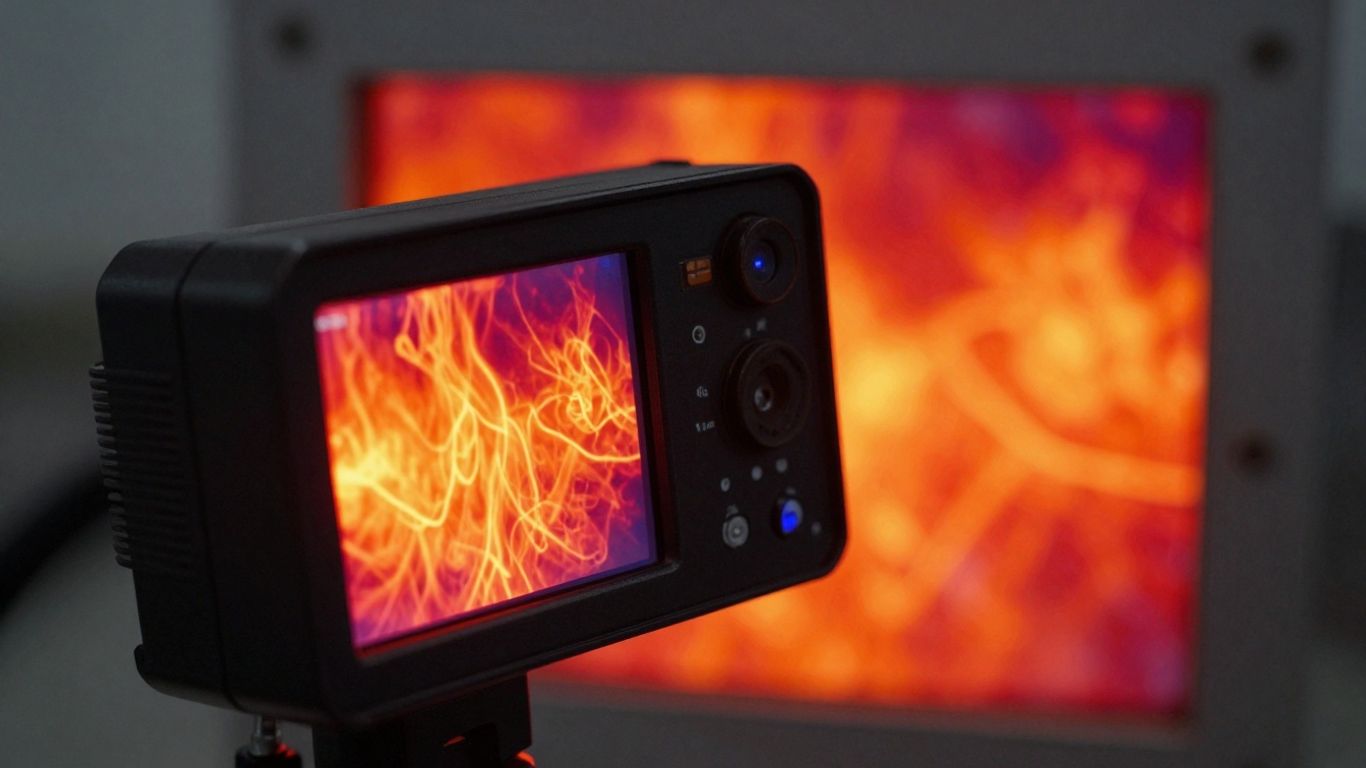
So, you’ve got these fancy thermal cameras, but how do you actually make them work with everything else you’ve got going on in your plant? It’s not just about pointing and shooting anymore. Making advanced thermal imaging solutions a real part of your daily grind means connecting them to your existing systems and making sure the data they collect actually helps you do things better. Think of it like adding a new tool to your toolbox – it’s only useful if you know how to use it and if it fits with the other tools you have.
Technology Integration and Advanced Capabilities
Modern industrial thermal cameras are pretty smart. They’re designed to play nice with other tech. For instance, you can often hook them up with vibration sensors. This combo gives you a much clearer picture of what’s going on with your machinery, especially things that spin. It’s like getting two opinions instead of one, which helps avoid jumping to conclusions about a problem.
And then there’s the AI stuff. Artificial intelligence and machine learning are starting to do some heavy lifting. They can learn what ‘normal’ looks like for your equipment and then flag anything that seems a bit off. This means less manual checking for your team and quicker reactions when something starts to go sideways.
Connectivity and Data Management
Being able to see what’s happening at one plant from your desk at another is a game-changer. Cloud connectivity lets you keep an eye on multiple locations all from one spot. You can gather thermal data from everywhere, compare it, and even share what works best across different sites. Plus, if you need an expert’s opinion, they can often help troubleshoot remotely without needing to travel.
Software for Actionable Business Intelligence
Just collecting temperature readings isn’t enough. The real magic happens when you turn that data into something you can act on. Software platforms can take those thermal measurements and show you trends over time. You might notice a slow temperature creep that you’d miss otherwise. Predictive algorithms can even take that historical data and give you a heads-up about potential issues down the road. This kind of information helps you make smarter choices about when to replace equipment, tweak your processes, or schedule maintenance.
Here’s a quick look at how integration can help:
-
Automated Alerts: Set up notifications for when temperatures go outside normal ranges.
-
Trend Analysis: Track temperature changes over weeks or months to spot gradual issues.
-
Predictive Maintenance: Use data patterns to forecast when equipment might need attention.
-
Reporting: Generate automatic reports for quality control and maintenance logs.
Getting advanced thermal imaging solutions to work smoothly with your current operations is key. It’s about making the technology fit your needs, not the other way around. This means thinking about how it connects, how you’ll manage the data, and what software will help you make sense of it all to actually improve things.
Choosing the Right Thermal Imaging Solution for Your Industry
So, you’re looking into thermal imaging for your business, huh? It’s a smart move, but picking the right gear can feel a bit overwhelming with all the options out there. It’s not just about grabbing the fanciest camera; you really need to think about what you’re trying to achieve and where you’ll be using it.
Aligning Camera Specifications with Application Needs
First off, let’s talk about what the camera can actually do. You’ve got to match the camera’s specs to your specific job. Think about the resolution – how much detail do you need to see? For spotting tiny issues on a circuit board, you’ll want something with a higher resolution, like 640×480 pixels or more. But if you’re just checking for hot spots on a large piece of machinery from a distance, a lower resolution might be perfectly fine and save you some cash. Then there’s the temperature range and accuracy. Make sure the camera can handle the hottest and coldest temperatures you expect to see, and that its accuracy is good enough for what you’re measuring. You don’t want a camera that reads 50 degrees off when you’re trying to spot a critical overheating component.
Considering Environmental Conditions
Now, where are you going to use this thing? Your factory floor might be a bit rough. Is it dusty? Is it really hot or cold? Are there a lot of vibrations? These things matter. You’ll need an industrial-grade camera that’s built tough, maybe with a high IP rating to keep dust and water out. A camera that’s not designed for harsh conditions might break down quickly, and that’s just a headache you don’t need. The environment you plan to operate in is a major factor in camera longevity and performance.
Evaluating Software and Connectivity Requirements
Don’t forget about the software and how it connects. Some basic cameras just show you a temperature reading, which is fine for simple checks. But if you want to track trends, get automatic alerts, or integrate with your existing factory systems, you’ll need more advanced software. Think about how you want to get the data out. Do you need real-time streaming over Ethernet, or is downloading files periodically okay? Wireless connectivity can be handy for hard-to-reach spots, but make sure the signal is reliable. The right software can turn raw thermal data into actionable insights, helping you make better decisions.
Here’s a quick rundown of things to consider:
-
Resolution: How much detail do you need?
-
Temperature Range & Accuracy: Can it measure what you need it to?
-
Durability: Can it handle your work environment?
-
Connectivity: How will it send data?
-
Software Features: What kind of analysis do you need?
Picking the right thermal imaging solution isn’t a one-size-fits-all deal. It requires a good look at your specific needs, the conditions it will face, and how it fits into your current operations. Getting this right upfront saves you a lot of trouble and money down the road.
Driving Cost Savings and Efficiency with Thermal Imaging
Let’s talk about how thermal imaging can actually save you money and make things run smoother. It’s not just about fancy cameras; it’s about smart operations. Think about it: when equipment isn’t working right, it’s costing you. Maybe it’s using too much power, maybe it’s about to break down, or maybe it’s making bad products. Thermal cameras spot these issues before they become big, expensive problems.
Energy Cost Reductions Through Efficiency Audits
One of the most straightforward ways thermal imaging helps is by finding where energy is just going to waste. You know, like heat escaping from a poorly insulated pipe or an electrical panel that’s running hotter than it should. These aren’t always obvious, but a thermal camera sees them clearly. By doing regular energy audits with these cameras, companies can pinpoint these leaks and fix them. This means less energy used, and a noticeably lower power bill. It’s a pretty direct way to see the savings.
Here’s a quick look at where energy waste often hides:
-
Electrical Systems: Overloaded circuits, loose connections, and failing components all generate extra heat.
-
Mechanical Equipment: Motors, bearings, and pumps that are worn out or not lubricated properly will run hotter.
-
Building Envelope: Poor insulation, air leaks around windows and doors, and faulty seals in roofs or walls let conditioned air escape.
Reducing Rework and Improving Product Consistency
Beyond just energy, thermal imaging is a game-changer for product quality. If a manufacturing process has a temperature issue – maybe it’s too hot, too cold, or uneven – the final product can suffer. This often means products don’t meet standards, leading to rework or even scrap. Thermal cameras provide a non-contact way to monitor these processes in real-time. They can see if a material is curing correctly, if a weld is at the right temperature, or if a coating is being applied evenly. Catching these deviations early means fewer faulty products and less money spent on fixing or discarding them. This consistency also builds a better reputation for your brand.
Achieving Significant Return on Investment
When you add it all up – the energy savings, the reduction in waste and rework, and the prevention of costly equipment failures – the return on investment (ROI) for thermal imaging is often quite impressive. Instead of waiting for something to break (which is expensive to fix and causes downtime), you’re proactively maintaining and optimizing. Predictive maintenance programs that include thermal imaging can save a significant percentage compared to just reacting to problems after they happen. It’s an investment that pays for itself pretty quickly through tangible cost reductions and improved operational flow.
The ability to see the invisible world of heat signatures allows for proactive problem-solving. This shifts maintenance from a reactive, costly burden to a strategic, efficiency-driving function. By identifying issues before they escalate, businesses avoid unexpected downtime, reduce repair expenses, and maintain consistent production quality, all contributing to a healthier bottom line.
The Future of Advanced Thermal Imaging Solutions in Manufacturing
Manufacturing is always changing, and thermal imaging is right there with it, getting smarter and more capable. We’re seeing some really cool stuff on the horizon that’s going to make things even better.
Advancements in Sensor Technology
Think about the cameras themselves. The sensors are getting way better. They can see finer details and pick up on really small temperature differences that we might have missed before. This means we can catch even the tiniest issues before they become big problems. It’s like upgrading from fuzzy binoculars to a high-definition telescope for heat.
The Impact of Artificial Intelligence and Edge Computing
This is where things get really interesting. Artificial intelligence (AI) is starting to do a lot of the heavy lifting when it comes to analyzing thermal images. Instead of someone staring at screens all day, AI can learn what normal looks like and flag anything that’s out of the ordinary. It’s faster and often more accurate. Plus, with edge computing, all this smart analysis can happen right there on the factory floor, without needing to send data all the way to the cloud. This means quicker reactions and better security for sensitive information.
Miniaturization and Embedded Systems
We’re also seeing thermal cameras shrink down. They’re getting small enough to be built directly into machines and production lines. Imagine a conveyor belt that has a built-in thermal sensor constantly checking the products passing by. This makes monitoring more continuous and less intrusive. It’s all about making thermal imaging a natural part of the manufacturing process, not just an add-on.
Here’s a quick look at what these advancements mean:
-
Better Detection: Smaller temperature variations are now visible.
-
Smarter Analysis: AI helps identify patterns and anomalies automatically.
-
Faster Response: Edge computing allows for real-time decision-making.
-
Wider Integration: Miniaturized cameras fit into more places.
The trend is clear: thermal imaging is becoming more integrated, more intelligent, and more accessible. This means manufacturers can achieve higher levels of quality and efficiency than ever before.
Ensuring Reliability Through Support and Training
Even the most advanced thermal imaging system needs a solid foundation of support and training to truly pay off. It’s not just about buying the gear; it’s about making sure your team knows how to use it and that the equipment stays in top shape.
Importance of Technical Support and Calibration
When you’re relying on thermal imaging for critical quality checks or to spot potential equipment failures before they happen, accuracy is everything. That’s where regular calibration comes in. Think of it like getting your car’s alignment checked – without it, things can start to go wrong. Industrial environments can be tough on sensitive equipment, with dust, vibrations, and temperature swings. Having a reliable technical support team on hand means you can get your cameras serviced and calibrated properly, usually on a schedule. This keeps those temperature readings honest and prevents you from making decisions based on bad data. Plus, knowing you can get quick help if something goes down is a big relief.
Training and Skill Development for Personnel
Let’s be honest, looking at a thermal image isn’t always as straightforward as it looks in the brochures. Your team needs to know what they’re looking at. Basic training covers how to operate the cameras and understand the software interface. But for real results, you need to go deeper. This means training your maintenance folks, quality inspectors, and even operators on how to interpret the thermal data. What’s a normal temperature for this machine, and what’s a warning sign? What do different color patterns actually mean in the context of your specific process? Getting this right means your team can spot issues early and take the right actions, rather than just collecting a lot of pretty pictures.
Long-Term Benefits of Investment in Human Capital
Investing in your people through training and development pays dividends down the road. When your staff are confident and skilled in using thermal imaging, they’re more likely to find innovative ways to use the technology. They become the eyes and ears that catch subtle problems, optimize processes, and prevent costly breakdowns. This isn’t just about fixing things when they break; it’s about building a culture of proactive maintenance and quality control. A well-trained team can also help identify when new applications or system upgrades might be beneficial, further improving your operation’s efficiency and reliability over time. It’s a cycle where better skills lead to better insights, which in turn leads to better business outcomes.
The true value of advanced thermal imaging isn’t just in the hardware itself, but in the knowledge and support systems that surround it. Without proper calibration and a skilled team to interpret the data, even the most sophisticated camera is just an expensive paperweight. Focusing on both the technology and the people who use it is key to realizing its full potential for reliability and efficiency.
Expanding Applications with Multi-Spectral Thermal Imaging
Enhanced Material Characterization
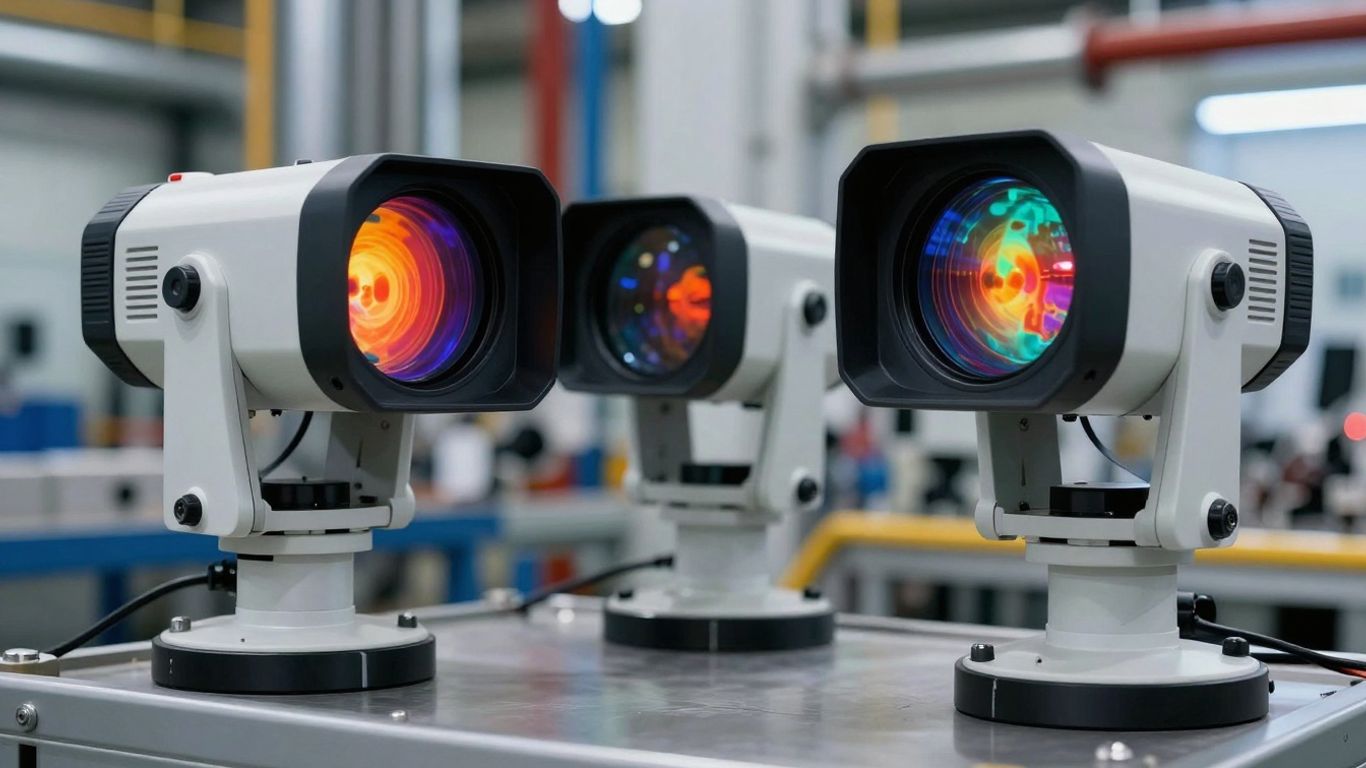
So, thermal cameras are getting pretty fancy. Beyond just seeing heat, some can now look at different wavelengths of infrared light. This is called multi-spectral thermal imaging. It’s like giving the camera more eyes, allowing it to pick up on details that regular thermal cameras miss. This means we can get a much better idea of what materials are made of just by looking at their heat signature. It’s not just about hot or cold anymore; it’s about the unique thermal fingerprint of different substances.
Detecting Specific Chemical Compositions
Because these multi-spectral cameras can see more, they can actually help identify specific chemical makeup. Think about it – different chemicals absorb and reflect infrared light differently. By analyzing these patterns, we can spot things like contaminants or specific compounds in a process. This is a big deal for quality control, especially in industries where the exact composition of a product matters a lot, like in food production or chemical manufacturing. It’s a way to check things without actually touching them.
Broadening Quality Control Possibilities
What does this all mean for quality control? Well, it opens up a whole new world of possibilities. We can now monitor processes and products in ways that were impossible before. Imagine being able to:
-
Spot subtle differences in raw materials before they even enter production.
-
Identify specific types of defects that might not show up as a simple temperature anomaly.
-
Verify the uniformity of coatings or treatments on a surface with greater accuracy.
This advanced level of detail allows for proactive adjustments, preventing issues before they become costly problems. It moves quality checks from reactive to truly predictive.
It’s a step up from just looking for hot spots. We’re talking about a more nuanced, detailed inspection that can catch problems earlier and more reliably. This technology is really changing how we can ensure product quality across the board.
Wrapping It Up
So, it’s pretty clear that thermal imaging isn’t just some fancy gadget anymore. It’s become a really important tool for keeping things running smoothly and making sure products are top-notch across a bunch of different industries. From spotting tiny problems before they blow up into big ones to just making sure everything’s running at the right temperature, these cameras are making a real difference. As the tech keeps getting better and more affordable, it’s only going to become even more common, helping businesses save money, cut down on waste, and generally do a better job. It’s a smart move for any company looking to stay ahead of the game.
Frequently Asked Questions
What exactly is thermal imaging and how does it help in factories?
Thermal imaging uses special cameras to see heat that objects give off. Think of it like seeing with heat instead of light! In factories, these cameras can spot things that are too hot or too cold, which often means there’s a problem with a machine or the product being made. It’s like a doctor using an X-ray to see inside the body, but for machines and production lines.
Can thermal cameras really find problems before they become big issues?
Yes, absolutely! Heat is often the first sign that something is wrong. A machine part getting too hot might mean it’s wearing out or about to break. By spotting these hot spots early with thermal cameras, companies can fix the problem before it causes a major breakdown, saving a lot of time and money.
Does using thermal cameras slow down production?
Not at all! That’s one of the best parts. Thermal cameras don’t need to touch anything or stop the machines to work. They can scan equipment or products while everything is running normally. This means quality checks can happen all the time without getting in the way of making things.
How do I know which thermal camera is right for my factory?
It’s important to pick a camera that fits what you need. Think about how clear the picture needs to be (resolution) and how well it can spot tiny temperature changes (sensitivity). You also need to consider where the camera will be used – is it dusty, hot, or shaky? Talking to experts can help you choose the best fit for your specific jobs.
Can thermal cameras help save money on energy bills?
Definitely! Thermal cameras are great for finding where energy is being wasted. They can show if insulation is bad, if pipes are leaking heat, or if machines are using more power than they should. Fixing these issues can lead to big savings on electricity and heating costs.
What’s the difference between a regular camera and a thermal one?
A regular camera sees light that bounces off things, like our eyes do. A thermal camera sees the heat that objects naturally give off. So, while a regular camera might show you what a machine looks like, a thermal camera shows you how hot or cold its parts are, revealing problems you can’t see otherwise.
Do my workers need special training to use these cameras?
For basic use, a little training is usually enough. But to get the most out of thermal imaging, especially for complex jobs like predicting machine failures, more advanced training and certification are recommended. Investing in training helps your team use the technology effectively and keep your factory running smoothly.
Can thermal imaging be used for more than just checking machines?
Yes, its uses are growing! Besides checking machines and products, thermal imaging can help with things like checking buildings for heat loss, finding electrical problems, and even in security. Newer types of thermal cameras can even identify different materials or chemicals, opening up even more possibilities for quality control and safety.